
The Myth of Bronze and the Rise of Living Mass
Western sculpture has often treated artistic achievement as a contest with time. Bronze, marble, and granite have been valued not only for their physical properties but for their promise of endurance. The monument appears successful when it can outlast its maker, its commissioning institution, and perhaps even the culture that produced it. Its authority is frequently tied to mineral permanence: the fixed body, the stable surface, the resistant mass.
That ideal is increasingly difficult to separate from the ecological systems that make it possible. Stone extraction alters landscapes, metal production requires intensive energy, and foundry work can involve hazardous fumes, chemical residues, and substantial material waste. The monumental object is never simply an isolated form. It carries a supply chain, a geological history, and a set of environmental consequences. In a period of ecological breakdown, the fantasy of permanence begins to look less like triumph than like a record of extraction.
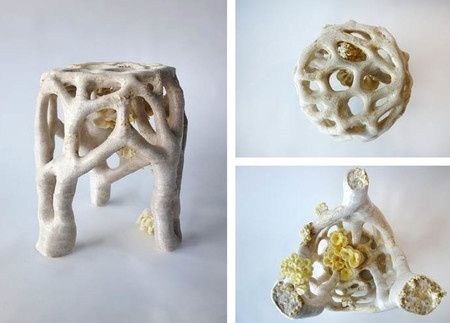
Living mycelium proposes a different ontology of sculpture. Rather than resisting time, the material grows through it. Rather than presenting form as finished, it makes form the visible outcome of metabolic exchange between fungal tissue, substrate, atmosphere, humidity, temperature, and human care. The sculptor becomes less an isolated author than a steward of multispecies agency. The artwork is not merely made, then preserved against change. It is cultivated, observed, negotiated, and eventually transformed.
Decentering the Solitary Author Through Interspecies Collaboration
Conventional sculptural authorship depends on control. In subtractive practice, the artist removes material until a desired form emerges. In additive practice, material is assembled according to a predetermined composition. Even when chance enters the studio, it is often framed as an event within a human-designed system. Mycelial sculpture changes the terms of that relationship. A mould can establish a boundary, but it cannot fully dictate how fungal tissue occupies that boundary, where it thickens, how it textures a surface, or when it begins to express its own reproductive cycle.
Xiaojing Yan”s work with Ganoderma lucidum, commonly known as lingzhi or reishi, offers a particularly clear example. Yan initially worked symbolically with purchased mushrooms and cast them in bronze, engaging a fungus associated with longevity and immortality in Chinese cultural traditions. After encountering industrial mushroom cultivation in China, the artist learned to grow the living organism in moulds. Her sculptures can take the form of busts, animals, and figures, but their final appearance is shaped by fungal development as much as by the initial structure. The mould provides an operative invitation rather than a complete command.
This distinction matters aesthetically and ethically. Growth introduces morphogenetic surprise, meaning that form arises through biological development rather than through direct manual manipulation alone. Variations in density, surface, colour, and extension become evidence of a living process. The artist”s intention remains essential, but it no longer functions as an absolute guarantee of outcome. Accepting that difference can weaken the egoic demand for exact repetition while strengthening attention, patience, and material literacy.
Contemporary research into biological materials and biofabrication helps clarify why this is more than a metaphorical collaboration. The field examines how living systems interact with scaffolds, environmental conditions, and engineered structures, as discussed in peer-reviewed research on biological materials. For the sculptor, the practical lesson is that biological agency is not an ornamental addition to a form. It is part of the form”s production logic.
| Conventional sculptural model | Co-biological model |
|---|---|
| Material is comparatively inert | Material responds, grows, and transforms |
| Form is fixed through direct intervention | Form emerges through conditions and interaction |
| Variation is often treated as error | Variation becomes a record of living process |
| Completion marks the end of making | Completion may be a temporary phase in a longer cycle |
| Conservation aims to stabilize the object | Care may involve documenting, redirecting, or accepting change |
Practical Methodologies for the Fungal Studio
A fungal studio begins with environmental design rather than with a single gesture of fabrication. Mycelium requires a suitable substrate, reliable sanitation, and conditions that support colonisation without allowing competing organisms to take over. Agricultural byproducts such as hemp hurd, sawdust, and spent grains can provide carbon-rich material, but each substrate has different moisture, density, nutrient, and structural characteristics. The choice should therefore be guided by the intended form, the desired rate of growth, and the artist”s capacity to monitor the culture.
Inoculation is not simply the introduction of spores or living culture into a mould. It is the establishment of a managed relationship between organism and environment. Relative humidity affects both growth and surface behaviour. Gas exchange influences respiration and development. Temperature changes metabolic speed, while light can affect the visual and reproductive phases of some fungi. Sterile discipline is equally important. Clean tools, prepared surfaces, careful handling, and separation between active cultures and ordinary studio waste reduce contamination and make the work more legible as an experiment.
Yan”s practice demonstrates that cultivation remains controlled without becoming predictable. After several months, mature lingzhi mushrooms may release spores, marking a shift from structural growth toward reproduction. The artist then dries and gently bakes the sculpture to preserve it. Other practitioners may choose kiln baking as a more decisive terminal treatment, or retain an unbaked work in a state of gradual senescence. These options are not merely technical. Each one proposes a different account of what the artwork is and when its living phase ends.
- Define the biological brief. Select the fungal species, intended dimensions, growth period, and acceptable range of variation before preparing the mould.
- Choose and prepare the substrate. Test hemp hurd, sawdust, spent grains, or other agricultural byproducts for moisture retention, compaction, and structural suitability.
- Prepare the studio environment. Establish clean work surfaces, controlled humidity and temperature, adequate gas exchange, and a clear separation between inoculated materials and ordinary studio waste.
- Observe without overcorrecting. Record changes in density, colour, texture, and growth direction. Intervene when contamination or structural failure threatens the work, but avoid treating every deviation as a defect.
- Decide how the cycle will close. Choose desiccated stasis, kiln baking, or continued unbaked senescence according to the conceptual and conservation needs of the project.
- Document the process permanently. Record substrate composition, environmental conditions, interventions, dates, images, and the point at which the object changed from living culture to preserved or decomposing artwork.
Museum Protocols and the Dilemma of Living Matter
The white cube is built around stability. Temperature, relative humidity, illumination, pests, dust, and handling are regulated so that objects remain materially legible over time. Living mycelium unsettles this model because respiration, growth, drying, sporulation, and decay are not accidental threats to the artwork. They may be the artwork”s central content. A gallery that treats the sculpture only as an object to be immobilised risks preserving a shell while erasing the temporal process that gave it meaning.
This creates a direct collision with classical conservation paradigms. Conservators are trained to prevent damage, document interventions, and minimise adverse effects, but biological materials complicate the definition of damage itself. A crack may be deterioration, or it may be evidence of drying. A change in colour may indicate chemical instability, or it may mark a conceptually necessary stage. Nonintervention can be responsible when intervention would falsify the work, while active care may be necessary if the artist has defined ongoing growth as part of the piece.
The Getty volume Living Matter examines these logistical, ethical, and conceptual questions across contemporary artworks made with plants, foods, bodily materials, bacteria, and other biological matter. Its central value for institutions is methodological: there is no universal preservation strategy. The appropriate approach depends on the artist”s intentions, the material”s behaviour, the work”s display history, public health considerations, and the institution”s resources.
Any museum accessioning a living or formerly living fungal artwork should establish explicit responsibilities before acquisition. The object file must include more than dimensions and medium. It should describe the organism, substrate, growth conditions, expected transformations, handling risks, and the artist”s position on substitution, replication, drying, or disappearance. Professional conservation guidance also emphasises competence, consent, preventive care, evidence-based treatment, safety, and complete documentation. These principles are especially important when a work”s biological activity could affect visitors, neighbouring objects, or the building itself.
- Define whether the artwork is the living organism, the cultivated form, the documented process, the preserved body, or a combination of these.
- Record the artist”s acceptable limits for intervention, replacement, reproduction, drying, baking, and natural decay.
- Assess ventilation, humidity, pest management, contamination, allergen exposure, and proximity to other collections.
- Develop a monitoring schedule that tracks biological and environmental changes without unnecessarily disturbing the work.
- Preserve cultivation records, installation instructions, photographs, video, environmental data, and conversations with the artist.
- Plan for the work”s afterlife, including deaccession, composting, burial, destruction, or continuation by another custodian.
Monuments for a Finite Planet
Public commemoration need not always take the form of a civic landmark designed to dominate its setting for centuries. A mycelial monument can operate as a soil-enriching intervention, gradually returning its material to the landscape that supported it. Its public force would come not from invulnerability but from visibility: viewers would encounter an artwork that changes because it is embedded in ecological exchange.
Such a sculpture could be cultivated from regional agricultural residues, displayed through a defined period, and then allowed to dry, fragment, or enter a managed composting system. The process would need careful planning to avoid introducing unsuitable organisms or contaminants, but the conceptual result could be substantial. Instead of extracting stone, casting metal, and importing permanence, the project would make nutrient transfer and material return part of its public meaning.
The social pedagogy of this model is equally important. Audiences would learn to read age, moisture, fracture, spore release, and decomposition not as failures but as phases. A monument might change alongside the people who visit it, becoming a record of duration rather than a denial of it. In this sense, living sculpture aligns commemoration with responsibility. It asks what a community is willing to care for, what it will allow to pass away, and what it hopes to nourish after the visible form has disappeared.
Embracing the Rot and Sowing Tomorrow
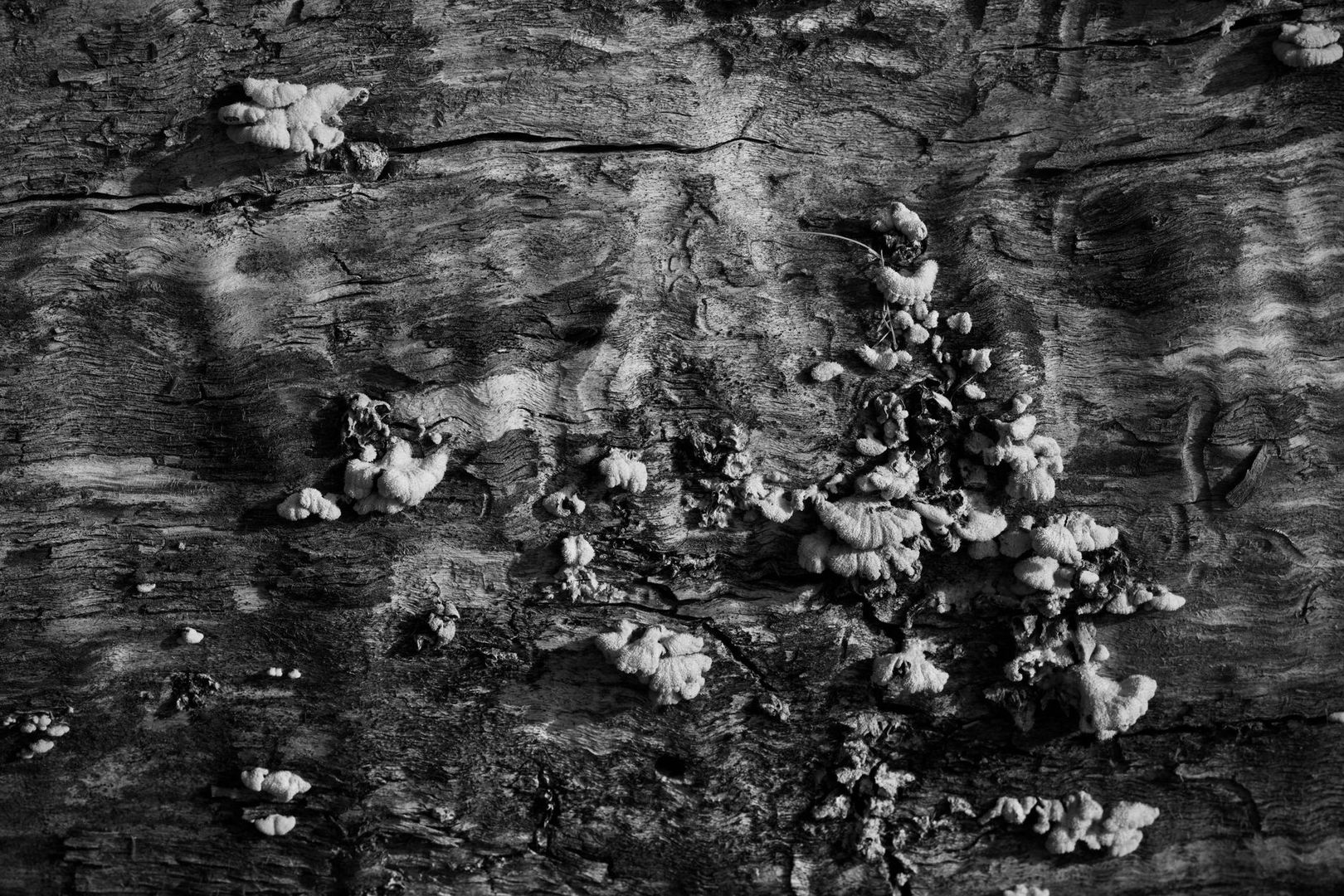
Living mycelium shifts sculpture from imperial permanence toward regenerative material cycles. It does not make permanence irrelevant, nor does it require every bronze or stone work to be rejected. Instead, it exposes permanence as one material and political choice among many. A fungal sculpture makes another choice: to let form remain accountable to metabolism, environment, labour, and time.
The sculptor”s new charge is therefore to design not only for appearance and display, but for afterlife. What will the substrate become? Which nutrients will return to the soil? What knowledge will remain when the object changes? Moving from the toxic foundry into the mycelial bed means accepting that authorship can be distributed, that conservation can include transformation, and that a monument may achieve its deepest significance by becoming part of what comes next.