
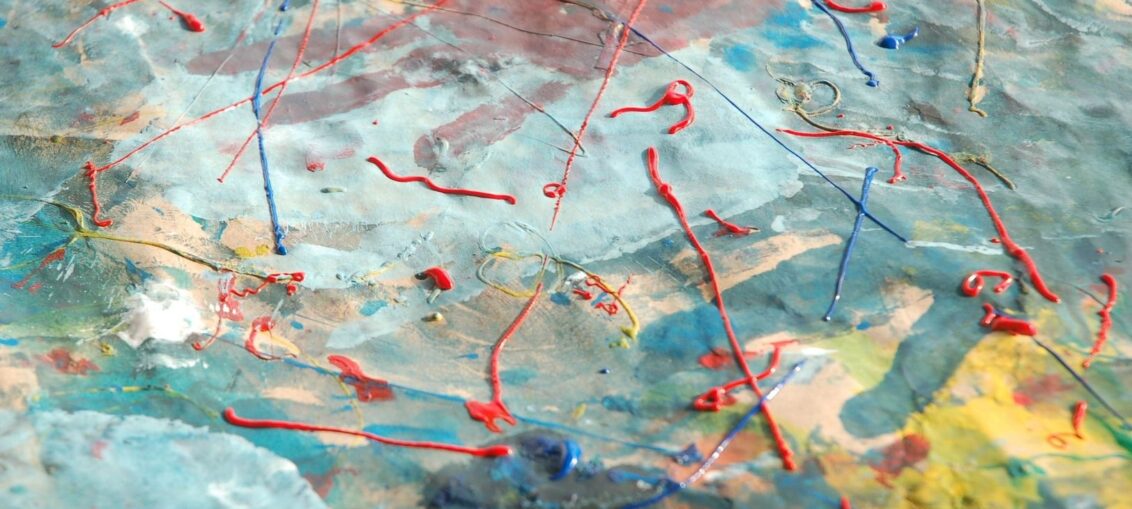
Redefining the Map Through Bodily Memory and Materiality
A conventional map promises stability. Streets become lines, districts become bounded shapes, and movement is reduced to measurable distance. Digital navigation extends this logic through algorithms that optimize routes, predict arrival times, and translate complex environments into instructions. These systems are useful, but they rarely register the hesitation before entering a doorway, the unease produced by a neglected underpass, or the tenderness attached to a particular wall. They describe where a person is, while leaving largely unrecorded how that place acts upon the body.
Tactile cartography begins with that omission. It treats personal geography as an intimate synthesis of physical sensation, emotional residue, memory, and material encounter. A neighborhood is not only an arrangement of coordinates. It is also the roughness of a handrail, the pressure of traffic noise, the smell of wet stone, the warmth retained by brick, and the recurring route taken during a period of change. In this sense, mapping becomes less a matter of copying territory than of making perceptible the relationships that territory produces.
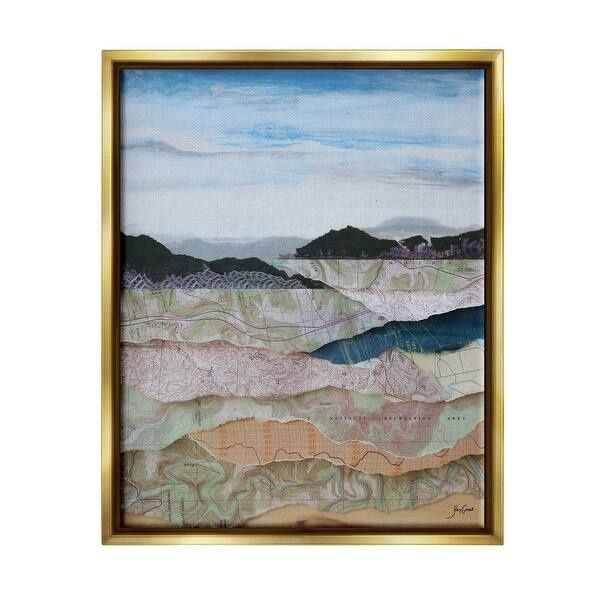
The studio pathway moves from intuitive walking toward a layered artifact. The artist drifts without relying entirely on predetermined destinations, gathers modest traces, records bodily responses, and then translates those impressions through washes, graphite, fibers, fragments, relief, and drawn pathways. The resulting work may resemble a map, but it functions more like a condensed field of attention. Its value lies not in navigational accuracy, but in giving form to a lived spatial knowledge that standard cartography tends to flatten.
The Drift and the Relic Gathering Physical Impressions of Place
The first stage adapts Situationist psychogeography into a deliberate tactile collection process. Coined by Guy Debord in 1955, psychogeography examines how places influence feelings and behavior. Its lineage includes Charles Baudelaire”s figure of the flâneur and the Situationist International”s interest in playful, unconventional movement through urban space. A contemporary studio practice can retain that spirit while introducing a more attentive material discipline. The walk becomes neither an aimless stroll nor a hunt for picturesque views. It becomes a controlled suspension of habitual recognition.
Before leaving, establish a loose constraint rather than a fixed route. Follow changes in surface, move toward recurring sounds, turn whenever a familiar landmark appears, or choose transitions between commercial, residential, industrial, and infrastructural zones. Carry a small notebook, graphite, a soft sheet for rubbing, a camera if appropriate, and containers for materials that can be collected lawfully and ethically. Do not remove living matter, protected objects, or anything whose removal could damage a site. The purpose is to gather evidence of contact, not to extract from the environment without regard.
- Collect small, discarded fragments such as packaging, weathered paper, thread, or fallen organic matter, while respecting local rules and ecological limits.
- Make graphite rubbings of accessible architectural textures, including paving, grilles, brick, timber, or painted surfaces.
- Record sensory observations with precise language, distinguishing direct perception from later interpretation.
- Note bodily changes such as acceleration, hesitation, compression, exposure, warmth, fatigue, or relief.
These practices shift the artist from observing a neighborhood as a visual scene to absorbing its rhythmic resistance. The body encounters gradients that an aerial view cannot show: a sidewalk that narrows near a construction fence, a crossing that makes movement feel exposed, or a shopfront that changes the tempo of a street. The gathered relic is therefore not merely an illustration of location. It is a carrier of pressure, duration, and contact. For a concise introduction to the wider field, this overview of psychogeography provides useful historical orientation.
Translating Internal Coordinates into Material Vocabulary
Back in the studio, the collected material needs a grammar. This does not mean assigning rigid symbols to every feeling. It means developing a flexible material lexicon in which texture, opacity, weight, color, and resistance can hold different kinds of spatial memory. A thin wash might suggest distance or uncertainty; compressed graphite may register repetition or pressure; a brittle fragment may indicate a landmark remembered as vulnerable. The interpretation remains provisional, because emotional meanings are not universal and can change as the work develops.
This approach has a productive parallel with recent research into conceptual knowledge. A 2026 report from Dartmouth”s knowledge-mapping research describes concepts as coordinates in a high-dimensional space, where distance can indicate similarity or difference. The analogy is not that memory can be reduced to a literal diagram. Rather, it suggests a useful studio question: which sensations sit near one another in the artist”s internal geography, and which are separated by a distance that ordinary measurement cannot explain?
| Spatial memory | Possible material treatment | Studio question |
|---|---|---|
| A route repeated under pressure | Dense graphite, parallel scoring, compressed dark marks | What rhythm did the body learn? |
| A lost or altered landmark | Erased paint, translucent overlays, partial collage | What remains when recognition fails? |
| A place of shelter | Soft fiber, padded relief, warm or opaque color | How can material communicate protection? |
| A threshold or uncertain boundary | Folded substrate, interrupted line, semi-transparent veil | Where does orientation become hesitation? |
| A charged encounter | Abrasion, embedded fragment, abrupt color shift | What physical event altered the meaning of place? |
Conceptual distance can also parallel structural distance in the finished work. Related memories might be physically clustered, while an apparently remote event may be connected by a single drawn line or repeated texture. Such decisions make composition analytical without becoming diagrammatic. The map begins to show not only where things occurred, but how the mind organizes proximity, interruption, association, and return.
A Studio Protocol for Layered Cartographic Assemblage
A layered cartographic work benefits from a sequence that protects uncertainty while giving the process enough structure to remain intentional. Archival concerns matter, particularly when incorporating found paper, fibers, or organic matter. Test adhesives and sealants on samples, avoid trapping damp material, and record the origin and date of collected fragments. The artifact can be emotionally open while its construction remains technically responsible.
- Begin with an emotional contour ground. Use thinned washes, diluted ink, or transparent acrylic to establish zones of intensity, calm, interruption, or drift. Let the brush respond to remembered tempo rather than outline streets literally. Add gestural graphite where movement felt repetitive, obstructed, or forceful. Preserve areas of silence, since an unmarked field can represent absence, distance, or an experience that has not yet become legible.
- Embed tactile fragments, fiber, and relief structures. Attach selected remnants with an archival binding medium appropriate to the substrate, and build low relief through layered paper, thread, gauze, or carefully prepared pulp. Resist the temptation to distribute materials evenly. Concentration and scarcity should follow the logic of the remembered place. A small fragment can carry more authority than a dense collage if it retains a specific surface or physical association.
- Scribe intuitive transit lines, thresholds, and speculative pathways. Use graphite, thread, incision, or painted marks to connect locations that may not be geographically adjacent. Distinguish remembered routes from imagined routes through shifts in line quality. A continuous line can hold habitual movement, while a broken or translucent line can suggest an erased path, a future possibility, or an uncertain recollection.
Throughout the protocol, maintain a distinction between evidence and invention. A rubbing records contact with a surface, but the meaning assigned to that surface is interpretive. A found wrapper may confirm a material presence, but it does not automatically explain the social life of the site. This distinction strengthens the work because it allows ambiguity to remain visible rather than disguising speculation as fact.
Speculative cartography offers an expanded model for this procedure. Its emphasis on community-authored futures, temporal layering, hybrid data, and ethical design demonstrates how maps can become instruments of narrative agency rather than neutral containers of information. In an individual studio, that principle can be translated into a map that holds past, present, and projected experience together. The artwork does not need to predict a future precisely. It needs to make alternatives imaginable and materially testable.
Navigating Disruption and Spatial Transformation in Changing Landscapes
Personal geography is never isolated from political and economic change. Gentrification, displacement, redevelopment, climate pressure, and altered access can transform the conditions under which memories are formed. A layered substrate is especially effective for registering this instability. A visible underpainting can stand for an earlier neighborhood, while opaque paint, industrial tape, or commercially printed surfaces indicate newer systems imposed over it. The structure of the object becomes an argument about what is preserved, concealed, or made difficult to retrieve.
Palimpsestic erasure is useful here, but it must be handled critically. Sanding away a line can evoke the disappearance of a landmark, yet erasure should not turn loss into an aesthetic effect detached from lived consequences. Collaged remnants, dated notes, and carefully identified fragments can keep the work accountable to specific histories. Where the project involves other people”s memories or culturally sensitive sites, consent, contextual respect, and community stewardship are essential. A map that claims to document belonging should not reproduce the exclusions it seeks to critique.
- Use transparent layers to show coexistence rather than presenting one version of place as the only truth.
- Mark uncertainty explicitly when a memory is incomplete or a historical account requires further research.
- Include multiple voices when the work addresses shared neighborhoods, especially where displacement or contested boundaries are involved.
- Allow the map to remain revisable through removable elements, additions, annotations, or future overlays.
The tactile map is therefore not a finished monument to a vanished place. It is an evolving record of ecological and community belonging. Digital neighborhood platforms often represent districts as fixed polygons, even though boundaries are socially produced and continually contested by residents, institutions, property interests, and political actors. A materially layered map can resist that false stability. Its folds, overlaps, abrasions, and exposed seams show that place is negotiated through time, power, memory, and use.
Carrying the Felt Horizon Forward into Daily Practice
Tactile mapping works best as a continuous sensory discipline rather than a single completed artwork. Revisit the same route in different weather, at different times, or after a significant change in the surrounding landscape. Compare notes without forcing them into consistency. The point is not to achieve a definitive personal map, but to sharpen the ability to notice how surfaces, sounds, social conditions, and bodily states interact.
This practice also carries political and emotional force. By claiming cartographic agency, the artist challenges the sterile standardization of digital space and makes room for forms of knowledge that are embodied, situated, and affective. The next walk can begin with a simple recalibration: attend to the material underfoot, the resistance of a threshold, the memory activated by a smell, and the difference between a boundary imposed by software and one experienced by the body. From those observations, another map can take shape, not as a final answer to where a place is, but as a careful record of how place continues to be felt.