
Beyond Documentation: The Attentive Ear as Creative Catalyst
Field recording becomes most powerful when it is understood not as passive archival capture, but as an active and situated aesthetic practice. A microphone does not simply collect an existing world. Its position, capsule, gain, shielding, duration, and relation to the recordist all determine what kind of world becomes audible. Recording is therefore already a form of composition, even before editing begins. The attentive ear selects, waits, compares, and notices relationships between events that visual attention might separate.
This approach extends the early work of acoustic ecology into contemporary installation and media art. R. Murray Schafer described acoustic ecology as the study of sound in relation to life and society, while the World Soundscape Project established methods for documenting changing sonic environments. Deeply rooted in foundational concepts of environmental sound, the discipline draws heavily upon the historical framework of acoustic ecology developed to assess our changing sonic habitats. Contemporary sound artists inherit this concern but also transform it, using environmental vibration to shape spatial structures, moving-image rhythms, tactile objects, and participatory situations. Intentional listening becomes a form of sensory architecture: it teaches an audience how to inhabit duration, distance, resonance, and absence.
Decentering the Recordist in Living Soundscapes
Conventional recording often privileges the presence of the recordist. Footsteps, handling noise, whispered commentary, and visible equipment can establish a human point of view, but they can also alter the behavior being observed. In delicate ecosystems, the ethics of capture begin with restraint. Non-invasive field practice asks how little disturbance is necessary, whether the recording can be made from a distance, and what forms of access should be refused entirely.
The method sometimes called the “invisible rig” responds to these questions by separating bodily presence from technical presence. A compact recorder and external microphones may be concealed in natural bark, fitted pouches, painted straps, cable sleeves, windshields, and local vegetation. A drop-recording system goes further, leaving the equipment unattended for hours or days. This changes the recording event from an encounter directed by the artist into a period of listening in which animals, weather, water, insects, and human activity determine the acoustic agenda.
Such disappearance is not a fantasy of objectivity. The recordist remains responsible for microphone placement, duration, power, weather protection, and interpretation. A hidden rig can still disturb animals, become damaged by curious species, or introduce its own visual and acoustic artifacts. Humidity can compromise microphones, while waterproofing may alter stereo imaging. The ethical value lies not in pretending to be absent, but in making one”s intervention proportionate, legible, and as limited as possible.
- Choose compact equipment when unattended recording reduces risk to wildlife and the environment.
- Use camouflage only where it does not create hazards or encourage animals to handle the equipment.
- Record environmental conditions, placement, duration, and technical changes alongside the audio.
- Do not treat a quiet human presence as automatically harmful or a hidden rig as automatically ethical.
Materialities of Capture Across Custom and Found Tools
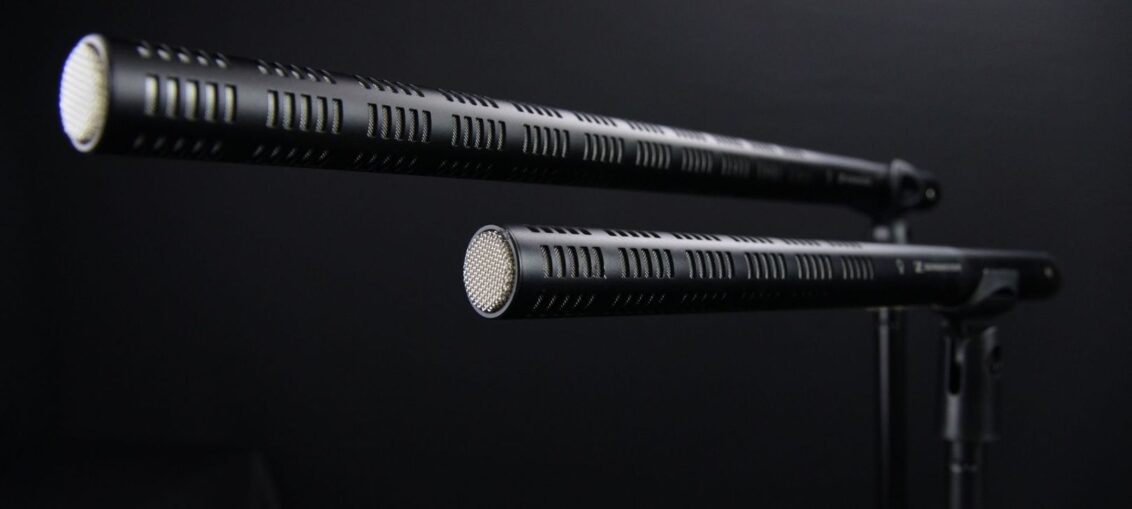
Every microphone offers a theory of attention. A cardioid microphone emphasizes a frontal scene and can bring distant sounds perceptually closer. A binaural pair seeks to reproduce aspects of human spatial hearing, producing an intimate and immersive perspective. Shotgun microphones isolate a narrow target, while omnidirectional lavaliers can be placed inside cavities, walls, or infrastructure to reveal acoustic situations unavailable to an exposed listener. As the field-recording tutorial associated with the Handbook for Acoustic Ecology explains, microphone choice, placement, and gain function as a form of pre-editing.
Hydrophones and contact transducers expand this material vocabulary. A hydrophone does not reproduce the air-based soundscape; it listens to energy moving through water, making underwater activity, harbour vibration, or submerged turbulence available as composition. A contact microphone captures vibration transmitted through an object rather than through the air. Attached to tree bark, metal railings, bridges, pipes, or a resonant sculptural surface, it can reveal friction, structural tension, sap movement, or mechanical transmission. The result may feel less like a representation of an object than an encounter with its hidden material life.
DIY tools make this principle especially visible. A self-built contact microphone for recording ants, a metal hanger suspended in a tree, or an improvised windscreen can produce sounds that standard commercial systems would exclude. Handmade equipment also encourages slower experimentation because its limitations are perceptible. A rough windscreen may create a particular softness; a repurposed resonator may exaggerate low-frequency vibration; a fragile cable may dictate where the listener can work. These constraints are not merely technical problems. They become compositional conditions.
| Tool | Primary listening perspective | Aesthetic consequence |
|---|---|---|
| Hydrophone | Vibration moving through water | Dense, unfamiliar textures and submerged spatiality |
| Contact transducer | Vibration moving through solid material | Structural resonance, friction, and tactile intimacy |
| Binaural microphones | Approximation of human spatial hearing | Immersive depth and headphone-based presence |
| DIY wind protection | Reduction or transformation of air turbulence | Variable softness, filtering, and audible material intervention |
From Raw Environmental Signal to Spatial Composition
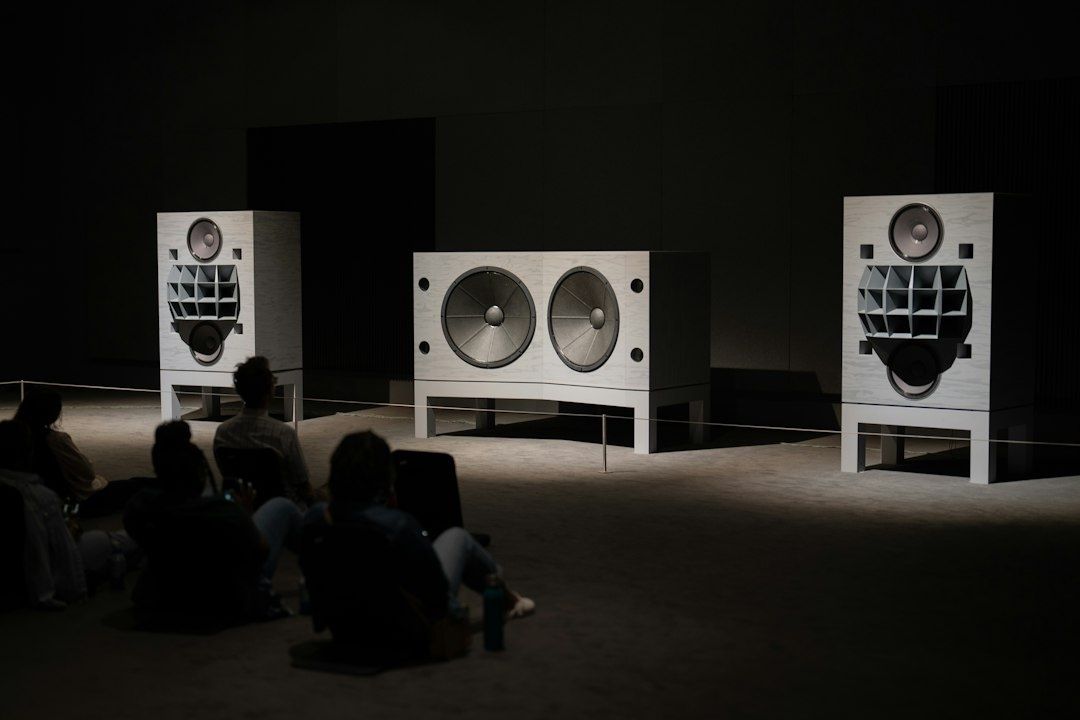
Environmental recordings become spatial compositions when their relationships are made perceptible rather than merely accumulated. A gallery installation might translate the regularity of insect pulses into a visual cadence, use the duration of a distant train to organize a visitor”s movement, or place low-frequency recordings beneath a floor so that sound is sensed partly through the body. The central question is not whether the work reproduces a location faithfully. It is whether the composition allows the listener to perceive a relation between site, time, material, and attention.
Hildegard Westerkamp”s soundscape-composition practice remains crucial here. Emerging from environmental sound work in Vancouver during the 1970s and shaped by the World Soundscape Project, her approach treats the recorded moment as inseparable from its cultural, social, political, and ecological context. Soundscape composition is not simply the placement of “natural sounds” inside a musical frame. It is an artistic transmission of meanings about place, time, environment, and listening perception. The ear and microphone are starting tools, but the finished work must also reveal how a listener has interpreted what was heard.
Contemporary practitioners often combine organic phonography with electronic processing, allowing synthesis to expose rather than conceal spatial depth. A field recording can be stretched until its internal rhythm becomes a drone, filtered to emphasize distant activity, or layered with tones that echo its spectral profile. Emma Palm”s album Inner Distance, for example, joins environmental recordings with electronic composition to explore separation, memory, and connection between California and Taiwan. Such work demonstrates that field recording can operate as a sonic diary without becoming merely illustrative. Artists and researchers frequently engage in collective listening residencies that explore our sonic environment to bridge raw phonography with performative intervention, as reflected in Our Sonic Environment.
- Attend to the recording”s internal event. Identify pulses, interruptions, resonances, silences, and changes in distance before applying effects.
- Define the spatial behavior. Decide whether sound should surround, lead, obstruct, vibrate through, or remain partially hidden from the visitor.
- Build relations rather than decoration. Pair organic and electronic materials because they clarify one another, not simply because their contrast sounds attractive.
- Test the work in motion. A composition that functions from one listening position may collapse as visitors walk, turn, or gather.
Listening as Transdisciplinary Practice and Ecological Witness
Listening is never politically neutral. The question is not only what becomes audible, but who is permitted to listen, whose testimony is trusted, and which sounds are classified as noise. Urban field recording can encounter unequal exposure to traffic, construction, policing, industry, and amplified public speech. Rural and Indigenous soundscapes may be extracted as aesthetic resources without acknowledging cultural ownership or local knowledge. An ethical practice therefore documents context and consent where appropriate, distinguishes public accessibility from unrestricted artistic use, and avoids presenting a place as empty simply because its human histories are not immediately audible.
Deep listening can also be transdisciplinary. Movement artists may respond to sound through weight, balance, and repetition. Linguistic practitioners can translate acoustic qualities into speech, gesture, or visual notation. Somatic listening asks where vibration is felt in the body, how attention changes with fatigue, and how a room”s reverberation affects posture and social behavior. The work of transdisciplinary artist dana e. fitchett, which brings together language, movement, music, deep listening, and translation, suggests that listening is not confined to the ear. It is a way of negotiating relation, difference, memory, and collective presence.
Ecoacoustics adds an analytical dimension. Long-term recordings can reveal patterns that visual observation misses, including changes in species activity, seasonal timing, habitat use, or the intrusion of anthropogenic noise. A 2025 article on the aesthetics of soundscape ecology and music composition describes how ecological recordings can inform composition while retaining their relationship to environmental origins. The reciprocal process matters: ecological research offers disciplined attention to place, while composition can make complex acoustic relations available as felt experience. Artistic transformation should not replace ecological evidence, but it can help audiences encounter evidence as duration, tension, and embodied knowledge.
- Ask which sounds are absent and whether that absence results from ecological change, technical limitation, or cultural filtering.
- Separate what the microphone captured from what the artist infers about the recording.
- Provide location, date, conditions, and processing information when transparency strengthens the work.
- Invite bodily and linguistic responses rather than treating listening as a purely individual activity.
Cultivating the Acoustic Imagination in Studio and Field
A durable field-recording practice joins observation with deliberate sculptural design. Begin with a sonic diary that records not only files, but weather, bodily state, microphone orientation, nearby surfaces, interruptions, and moments of uncertainty. Return to the same site at different times. Repetition reveals variation, and variation prevents a location from being reduced to a single emblematic sound. In the studio, preserve several versions of the material: an unprocessed reference, a working edit, and a compositional derivative. This keeps aesthetic transformation connected to its source without treating fidelity as the only measure of value.
Auditory mindfulness is strengthened by practical protocols. Spend several minutes listening before activating the recorder. Make short test recordings while changing orientation and height. Monitor safely, especially near roads, water, unstable structures, or wildlife. Use headphones critically, since they can intensify detail while isolating the body from environmental risk. Most importantly, treat silence as information. A pause may indicate distance, shelter, seasonal change, acoustic masking, or an ethical decision not to pursue a sound.
- Maintain consistent file names and field notes so that context survives beyond the initial session.
- Compare close, distant, airborne, submerged, and structural perspectives on the same environment.
- Build installations that reward movement and attentive duration rather than instant spectacle.
- Credit collaborators, communities, locations, and technical contributors with precision.
- Review the ecological and social consequences of recording before public presentation.
Acoustic art matters because it can alter the scale at which environments are understood. It can make a bridge feel alive with transmitted force, allow a visitor to inhabit the temporal density of insects, or reveal that a seemingly quiet place is structured by distant infrastructures. When field observation is joined to critical listening and careful spatial design, recording becomes more than evidence. It becomes an instrument for cultivating environmental empathy, a method for sharing attention, and a practice of making space audible.